
Mastering Your Condo & HOA Annual Board Meeting – Insights from Association Leadership Webinar Series S7, E2
November 19, 2025
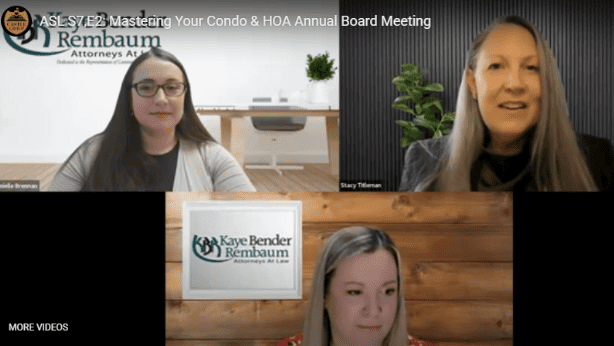
In the latest episode of Castle Group’s Association Leadership Webinar Series, Mastering Your Condo & HOA Annual Board Meeting Season 7, Episode 2, Executive Vice President of Strategic Growth, Stacy Titleman, and Kaye Bender Rembaum Attorneys Danielle Brennan, Esq. and Emily Gannon, Esq. discussed the common concerns and best practices surrounding community association elections, particularly for condominiums and HOAs in Florida.
HOA vs. Condominium Election Requirements
Florida statutes and administrative codes heavily regulate condominium elections. HOA elections, in contrast, follow their governing documents. Condos must adhere to strict timelines:
- 60 days: First notice soliciting board candidates
- 40 days: Deadline to declare candidacy
- 35 days: Deadline to submit candidate information
- 14–34 days: Second notice with ballots and voting instructions
HOAs vary widely. Some follow a condo-style process; others use proxy voting or floor nominations. Many HOAs now amend documents to mimic condo procedures, increasing structure, and encouraging participation.
Board Candidacy Eligibility
To qualify for board service:
- Generally, candidates are owners. However, they are not required to be unless documents state otherwise.
- Felons who have not had their civil rights restored for at least five years or individuals owing assessments at the time of the deadline for nomination are ineligible.
- Co-owners may run, but often can’t serve simultaneously unless certain conditions are met.
- Term-limit exceptions exist for condominium directors if not enough candidates apply or if two-thirds of voters elect a term-limited individual.
Governing documents cannot impose non-statutory criteria such as residency or meeting attendance requirements.
House Bill 913 and Annual Meeting Quorums
New legislation requires a physical board member’s presence if annual meetings occur via video conferencing. However, election validity remains independent of the meeting quorum. Condominium elections need only 20% participation to count, regardless of board presence.
Proxy Use in Elections
Proxies can establish a quorum or authorize votes on issues like amendments or reserves. In condos, owners cannot vote for board candidates via proxy. In HOAs, proxy voting often elects board members. Associations must verify proxies and follow limits specified in their governing documents.
Electronic Voting
Statutes allow both condos and HOAs to implement online voting platforms, provided:
- The board passes a formal resolution.
- Owners opt in via written consent.
Electronic voting simplifies elections, speeds tallying, and maintains ballot anonymity. A recent condominium statute allows email ballots but introduces risks such as lost anonymity and ballot validation issues. Third-party platforms like GetQuorum and VoteHOANow mitigate those risks.
Best Practices for Annual Meetings
To ensure smooth elections:
- Prepare sign-in sheets and voting rosters early.
- Verify ballot envelopes and proxies before meetings.
- Form an impartial verification committee.
- Use clear ballot instructions and voting certificates where required.
- Consider adopting electronic voting for efficiency.
Associations must also ensure compliance with documentation and notify owners about voting options. When implemented correctly, these steps shorten meeting duration and increase community engagement.
What Happens If No One Runs?
If no candidates apply in a condo, the board rolls over. However, if no board quorum remains, a court-appointed receiver may take over, often at great financial cost to the association.
Having legal counsel present at annual meetings helps ensure proper procedures, especially when election-related disputes or tensions arise. Attorneys act as neutral parties focused on legal compliance.
As annual meeting season approaches, staying informed and prepared is the key to maintaining a well‑run, transparent, and engaged community. This episode delivered clear guidance on everything from statutory election timelines for condos to eligibility requirements and documentation best practices that help associations avoid costly missteps. If your board is navigating proxies, electronic voting, or the challenges of low participation, the insights shared by industry experts offer practical steps to strengthen your association’s governance and streamline the entire election process.
Watch the complete webinar here: https://castlegroup.com/webinar/mastering-your-condo-hoa-annual-board-meeting/.
To learn more about how Castle Group can serve your community, request a proposal at https://castlegroup.com/request-a-proposal/.
Tags:
